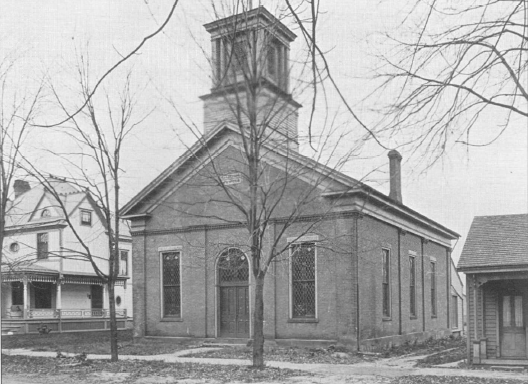
St. Paul's Lutheran Church 1837
1842-1992
Sesquicentennial Anniversary
History of Good Hope Lutheran Church
Bucyrus, Ohio
The Beginnings
When settlers arrived at what is now Bucyrus, they found an old, abandoned wigwam standing in the woods on what is now the court-house yard. It was October 1819, and a party of 18 Pennsylvania Dutch Germans stayed in that wigwam 3 days until a log cabin could be built. Seth Holmes guided them there. He had been through the area taking part in the War of 1812 and had remembered the beauty of the area. Whether they knew it or not, Bucyrus was situated on the highest ridge in Ohio, the dividing line for water running north or south.
The History of Good Hope Evangelical Lutheran Church dates back to the time when this area of the country was settled. Good Hope has ties with two other congregations in Bucyrus, as we shall see later. In 1829, a Lutheran minister named J. D. Schuh preached to Lutherans in this vicinity. There was no real organization; but, there is evidence that scattered Lutherans met at an old brick schoolhouse for worship. Rev. Schuh ministered to these people for a year or less.
In 1830, Rev. Schuh’s successor was Rev. J. Strauch, also known as “father” Strauch. He came to the Bucyrus area at the age of 70 years as a missionary from Germany. Under his administration, the first Lutheran congregation was organized. (Details are sketchy since there are no official documents still available from this period.) At first, the German language was used exclusively in the services. Around 1832, a huge influx of German immigrants came directly from Germany to settle in Crawford County. As Rev. Strauch was eager to retire from active ministry, the English speaking portion of Lutherans met on December 1, 1832, and extended a call to Rev. F.J. Ruth of Ashland, who had been coming at stated times from Ashland, preached to the English speaking group. In the spring of 1835, he moved to Bucyrus. Both he and Rev. Strauch served the congregation together for several years.
The first church council was organized in January of 1833. Members of that council were: elders, Abram Mayer and George Schroll; deacons, Nicholas Failor, and Abram Schroll; trustees, Adam Blair and Nicholas Cronebaugh. At this time, the congregation outgrew the old brick schoolhouse. They moved to the county courthouse and worshiped there until they could build a church of their own. The next church council was elected in May of 1835 and increased to four elders, four deacons, and three trustees.
In the latter part of 1835 or early 1836, the trustee purchased, for $400, the lot located on the corner of E. Mansfield Street and Walnut St. After perfecting all the necessary arrangements, the cornerstone was laid on August 20, 1836. This young congregation was to be called St. Paul’s Evangelical Lutheran Church, and the cornerstone was laid before what was called “a large concourse of people.” Records indicate that it was a matter of special pride that this congregation had the first church building in town adorned with a steeple.
Worship services continued to be held both in German and in English. Little else is known, about the particulars of this arrangement.
In 1842, the German element decided to separate itself from the congregation. After an amiable agreement, the German part sold their property rights to the English speaking portion of the congregation, thus legalizing the agreement. This settlement was finalized on December 9, 1842. The new organization was called DEUTSCHE EVANGELISCHE LUTHERISCHE GUTE HOFFNUNG GERMEINDE or the GERMAN EVANGELICAL LUTHERAN GOOD HOPE CHURCH. There are still, to this day, those who call St. Paul “the English church” and Good Hope “the German church.”
A German Lutheran pastor from the area, Rev. J. Kraus was asked to organize the new German congregation.
The two congregations continued to worship at the old St. Paul’s church building until March 29, 1857, when it was torn down.
Good Hope Church laid the cornerstone of a new building on August 12, 1857. Part of that building is now used by the St. James Episcopal congregation.
Early History and Our Pastors
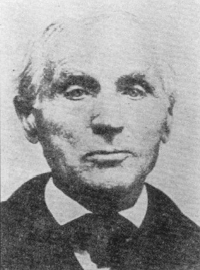
REV. J. KRAUS 1842-1854
As has already been stated, the congregation was organized while under the pastoral care of Rev. J. Kraus who, previous to 1842, served not only Bucyrus, but other places in this vicinity. At first he held services every four weeks, but later he was able to preach every two weeks. He was the first pastor who belonged to the Joint Synod of Ohio. The congregation also became organically connected with that still young and then small body. Rev. Kraus served the congregation for twelve years after its organization and then resigned both pastorate as well as ministry and moved to Tiffin, Ohio were he died December 8, 1893.
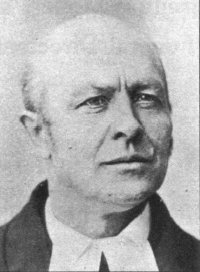
REV. A. MICHAELIS 1855-1867
In March of the year 1855, the Rev. A. Michaelis was called to become pastor of the congregation. In July of this year, a constitution was drawn up; in the same year, the congregation procured the Evangelical Lutheran Hymnal, the Philadelphia edition. The year 1856 marked the beginning of the building of the congregation’s own church, for by April 1, 1857, the old St. Paul’s church in which the German services were held was to be torn down. After considerable deliberation as to the site of the new church, the lot on South Poplar Street where the Episcopal church now stands was purchased. The last service in the old St. Paul’s church was held on March 22, 1857.
August 12, 1857, marked the laying of the cornerstone of the new church, a neat little structure built of brick at a cost of $5,000. The congregation continued to grow and prosper, and after a twelve year period of faithful and splendid service, Rev. Michaelis received and accepted a call to Liverpool, Ohio. He died at Westerville, Ohio, August 13, 1885; but his body is buried in Oakwood Cemetery of this city.
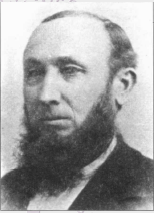
REV. J.F. GRAESSLE 1867-1880
During Rev. Graessles pastorate, the congregation increased so rapidly that it became the largest in the city. In addition, Rev. Graessle served the congregation at Olentangy and Sulphur Springs. Owning to the growth of the congregation here, he later gave up these two charges to devote his entire time and strength to his charge here.
During Rev. Graessles pastorate the church was refrescoed, gas was introduced for lighting purposes and a $1,000.00 pipe organ was installed which served the congregation till 1895. Finally, he was also successful in prevailing upon the congregation to buy a parsonage property located on the southeast corner of Poplar and Charles Streets, where our present church office now stands, for $1,600.00.
The question of establishing a parish school arose at this time, which would have been a most opportune one for such a school. But either the time was not ripe, the need not seen, or the financing too great a burden, for the matter was laid aside till a more appropriate time which, unfortunately, never came. It was through Rev. Graessle influence that instruction in the German language was given in the public schools of our city.
Rev. Graessle resigned his pastorate here in 1880 and moved to Rockford, Illinois, where he died in 1888. His body is buried at Jacksonville, Illinois. His family returned to Bucyrus, Ohio.
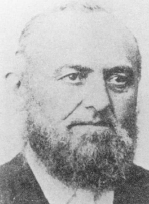
REV. C. EIRICH 1881-1887T
Rev. C. Eirich was a pastor of this congregation from 1881 till the end of the year 1887. Under his administration, nothing of unusual importance occurred, but affairs seemed to be taking their regular and natural course. Pastor Eirich was an excellent speaker, always endeavoring to uplift his listeners. When he resigned his pastorate here in 1887, he also resigned the ministry and moved with his family to a farm near Van Wert, Ohio.
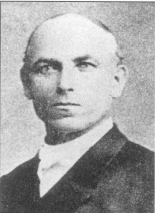
REV. F.W. DIESS 1887-1890
The successor of Rev. Eirich was Rev. F.W. Diess who has been educated for the mission field and served the church in the capacity of a missionary at Jerusalem, Palestine for some time. His pastorate here was brief; soon after his arrival, he became ill. Death claimed him at the age of 54 years, after serving the congregation less than three years. His body is buried at Oakwood Cemetery. For some considerable time after his death, the congregation was vacant. During the vacancy, the congregation was served by theological student A. Niclos, later to become pastor at Ann Arbor, Michigan.
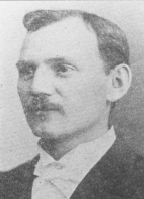
REV. C.F. GEBHARDT 1890-1897
In the fall of 1890, a call was extended to Rev. C.F. Gebhardt to become pastor to Good Hope Church. Rev. Gebhardt accepted the call and moved here shortly afterwards. He was a very gifted man with a genial disposition. In consequence of this and his earnest preaching, the congregation experienced such a remarkable growth that the old church became too small and a new church edifice became an urgent necessity. As a result of his ever faithful labors, the present church building was erected.
However, before the construction of the new building was started, Rev. Gebhardt's health began to be impaired, and he felt a need of a rest. The congregation granted him a leave of absence during which time he visited Europe. Upon his return, he seemed greatly strengthened, but the gain was not permanent. His supply pastor during his absence was student F. W. Abicht.
On June 7, 1891, the congregation decided to build a new church if the necessary funds could be raised. On July 12, 1891, a committee was named by the congregation to get subscriptions toward the building of a new church. By October, this committee reported that over $11,000.00 had been subscribed.
The selection of a location presented some difficulties. Most of the members favored the locations of the parsonage, the southeast corner of Charles and Poplar Streets, which location it now has.
The dimensions agreed upon were: length, 88 feet, width, 64 feet. The tower reached a height of 169 feet, not including the 12 foot cross on top of the tower. The expenditure for a realization of this plan was set by the architects at $16,381.00. Chas. Roehr and Sons were given the contract. The contractor took the contract for the stipulated sum with the addition of the old church building whose worth was appraised at $3,000.00.
The cornerstone of the new church was laid August 12, 1892, in the presence of a large crowd. Pastor W.F. Helle of Upper Sandusky, Ohio conducted the German service; Prof. D. Loy of Columbus, Ohio, the English.
On Sunday, October 29, 1893, dedication services were held. With the interior furnishing, the cost of this new church reached the sum of $26,000.00. On the day of dedication, $21,000.00 had been paid.
The following members served as building committee: Rev. C.F. Gebhardt, president; Frank Liebich, secretary; Frank P. Donnenwirth, treasurer. The remaining members were P. Barraider, John Myer, Geo. Mader, A. Ulmer, J. Karg, and Christ Walther. J.C. Johnson of Fremont, Ohio, was the architect, Chas. Reler and Sons, the contractors, and C. Walther, the builder.
At the dedication, which occurred October 29, 1893, Dr. F.W. Stellhorn, of Columbus, Ohio, preached the German, and Rev. Geo. Dillman of Fostoria, Ohio, the English sermon. Dr. Julius Sturm, of Germany, a friend of Rev. Gebhardt, composed the German dedication hymn, which was sung by the congregation at the dedication services.
The church has a seating capacity of 700. Upon entering, one is immediately impressed by the beautiful interior and its worshipful atmosphere. All the woodwork and pews are hand carved from hard oak and are finished in natural color.
High above the church on a 165 foot spire stands a cross reminding all who approach the city from every direction of the Savior and His sacrifice on Calvary. Moved by this cross and its silent message, many seek to unburden their souls of sin. Huge bells call the worshippers to this house of the Lord. The church has a beautiful, worshipful atmosphere with a life-size statue, on the altar, an exact duplicate of Thorwaldse's The Christ, carved from wood by Carl F. Broemel, a local resident who presented it to the congregation as a gift.
Just a few months after the dedication of the church, a fire started in the basement of the church which would have been disastrous had it not been discovered in time. The smoke blackened the entire interior of the new and beautiful edifice. This occurred in January, 1894.
In 1895, the church was refrescoed, recarpeted, and a new pipe organ was installed, the total cost of this amounting to over $3,600.00
Rev. Gebhardt's health gradually declined after the construction of the new church had begun, until his death claimed him on February 17, 1897. His body rests in Oakwood Cemetery, by the side of his predecessor in office.
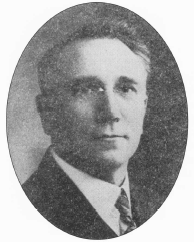
REV. J.W. KUNTZ 1897-1910
Soon after Rev. Gebhardt's death, Rev. J.W. Kuntz was called to become pastor of Good Hope Lutheram Church. He accepted the call, and in the latter part of May, 1897, was installed onto his pastorate by Rev. Dr. G.H. Schodde of Capital University, Columbus, Ohio.
At this time, a debt of $3,000.00 lay in the congregation. By 1900 it was lifted and the congregation was free of debt.
Since the old parsonage had been sold and the location used for the new and present church edifice, the congregation decided to purchase, in 1901, a parsonage located at 323 S. Walnut St. for $3,500.00. By the next year, $2,000.00 had been paid of this amount.
There were at this time about seven hundred fifty communicant members. September 24, 1905, the church was refrescoed, and a new pipe organ was installed.
Later, in 1907, at the tenth anniversary of his pastorate, the congregation gave the pastor a leave of absence for three months, together with a neat little sum of money. Both time and money were used in making a tour of Europe.
In addition to serving the congregation here, Rev. Kuntz served at Olentangy to two years and at Martin Luther for one year. Through his influence the Martin Luther congregation joined the Ohio Synod in 1907.
Three years later, Rev. Kuntz received a call to Bellevue, Ohio, which he accepted. Because of impaired health, he later moved to Pemberville, Ohio.
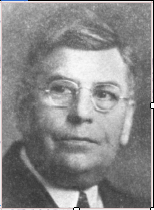
REV. O.A. BERTRAM 1911-1934
In November, 1910, a call was extended to Rev. O.A. Bertram of Toledo, Ohio, who entered upon active duties of his office January 15, 1911. His induction services were conducted by Rev. Kuntz.
The congregation continued to grow spiritually and numerically, the communicant membership in 1916 being over one thousand. In 1912, the congregation purchased property to the south of the church at a price of $4,000.00 which sum was paid almost entirely by the various societies of the church. The rear portion of the parking lot, together with a part of the plot of ground to the east of the church, was used for the construction of the present parish house whose cornerstone was laid on Sunday, September 12, 1915. Dedication services were held in April 1916. Cost of this structure exceeded $30,000.00.
The interior of the church was revarnished, the sacristy recarpeted, new candelabra placed on the altar and other improvements were made in 1915. Individual communion cups were introduced in the spring of 1916. The set of trays and art glass cups were presented by Mr. and Mrs. Lewis Mollenkopf.
Refrescoeing of the church, redecorating of all woodwork, installing of a new lighting system took place in 1922.
Completion of the new parsonage on the site of the old parsonage, which was razed, took place in 1926. The estimated cost of this home was $20,000.00.
Rev. Bertram pastorate here was conducted May 15, 1934 after serving the congregation for twenty-three years and four months. From here he went to New Baltimore, Michigan, but since May of the year 1941, he lived in Howell, Michigan.
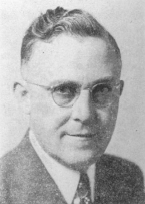
REV. H.H. GLICK 1934-1948
Rev. H.H. Glick was installed on October 17, 1934. The following year, the parish house was completely redecorated, within and without. Rededication services were held on October 27, 1935. This year also marked a change in the church office which was enlarged, redecorated, and completely furnished. The new American Lutheran Church hymnals were presented and introduced to the congregation in the same year (1935). In 1938, the church auditorium was refinished, and some improvements were made in the heating system. Many new items such as carpets, light fixtures, altar coverings, candle sticks, pulpit lamp, and Bibles were added.
So loyal was the cooperation in this venture that the day of rededication, March 20, 1938, it was made known that every new item had been presented as an unsolicited gift by various organizations and individuals of the congregation. Funds for the refinishing of the church auditorium and the retiring of church indebtedness were raised by the use of the Master treasury barrels which produced between $5,000.00 and $6,000.00 within a period of two years.
The year 1941 found the church gathering funds, by the same method, for a new organ, the immediate objective for the centennial year 1942. Recommendations for committee, after intensive study and a number of visits to various places to hear types of organs, reported their choice to be a Kimball three manual organ.
Installation began in the spring of 1942 and was completed by Sunday, August 23, on which date the initial playing took place at the morning service.
The cost of the organ, exclusive of the chimes, was $8,300.00. Attendance at English services increased noticeably, but attendance at German services was definitely on the decline.
By 1942, the centennial year the membership numbered approximately 1,100, and the German services were completely discontinued at this time.
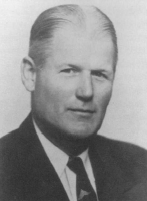
REV. E.J. KATTERHENRICH 1949-1960
In 1949, Pastor E.J. Katterhenrich became the new pastor. With the growth of the Sunday School, more room was needed and the basement under the church and parish house supplied the needed space. Thirty-six thousand dollars was donated in 1945 for a chapel which was located within the parish house unit. The Blicke chapel was dedicated in March 1952.
As another project, Rev. Katterhenrich helped train many seminary students who spent a year of internship under him. In this way, it was felt the seminary could be helped, since the congregation had sent only three sons into the ministry: namely Paul Baumgartner, Grant Shealy, and Richard Schieber.
Interns:
Richard Graves 1954-55
Clarence Rose 1955-56
Lynn Neiswander 1956-57
Loren Speicher 1957-58
Gene Walker 1958-59
John Sitler 1959-60
Richard Vette 1960-61
Richard Grance 1961-62
After W.W.II, Good Hope sponsored a German family. They arrived in Bucyrus on Christmas Eve, 1951. The family was met at the Railroad station by Rev. Katterhenrich, Mrs. David Fahl, and Ervin Lutz. The family was made up of Mr. and Mrs. Greilich, Dietmar, Horst, Guinther, and Else. A daughter Ruth, had to remain in Germany because of poor health. She did come later. The whole family attended the Christmas Eve Service. A home was found for them on Woodlawn Ave. The family remained as members of Good Hope Lutheran.
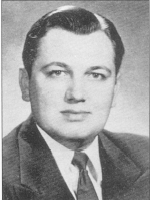
REV. R.E. BAUERLE 1961-1969
On Pentecost of 1961, Rev. Richard L. Bauerle became the Good Hope pastor, and through his efforts with the Bethel Series, Good Hope became a united learning church. In 1963, the Rev. Edwin Kressin was called as a visitation pastor, and in 1967 the Rev. Raymond Menchhofer was called as an assistant pastor.
Rev Kressin who marked 50 years of service in the ministry in April 1971, drove thousands of miles each year calling on shut-ins, new members, and people in area hospitals and rest homes. Rev. Menchhofer was in charge of parish education.
Building Fund
In 1964, a campaign committee was formed to help guide the church in its financial planning to raise a $250,000 Building Fund as well as $70,000 annual operating and benevolent budget.
An educational unit was needed and it was decided to attach this unit to the present building and to completely renovate and remodel the church.
In 1967, Good Hope celebrated its 125th anniversary. As an act of thanksgiving for God's blessings to the congregation, a gift of $125,000 was pledged to the American Lutheran Church. One hundred thousand dollars of the gift was to be given to LIFE (Lutheran Ingathering For Education), and $25,000 was to be given for a new American Lutheran Mission Church.
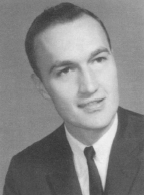
REV. R. MENCHHOFER 1967-1971
Dedicated December 15, 1968
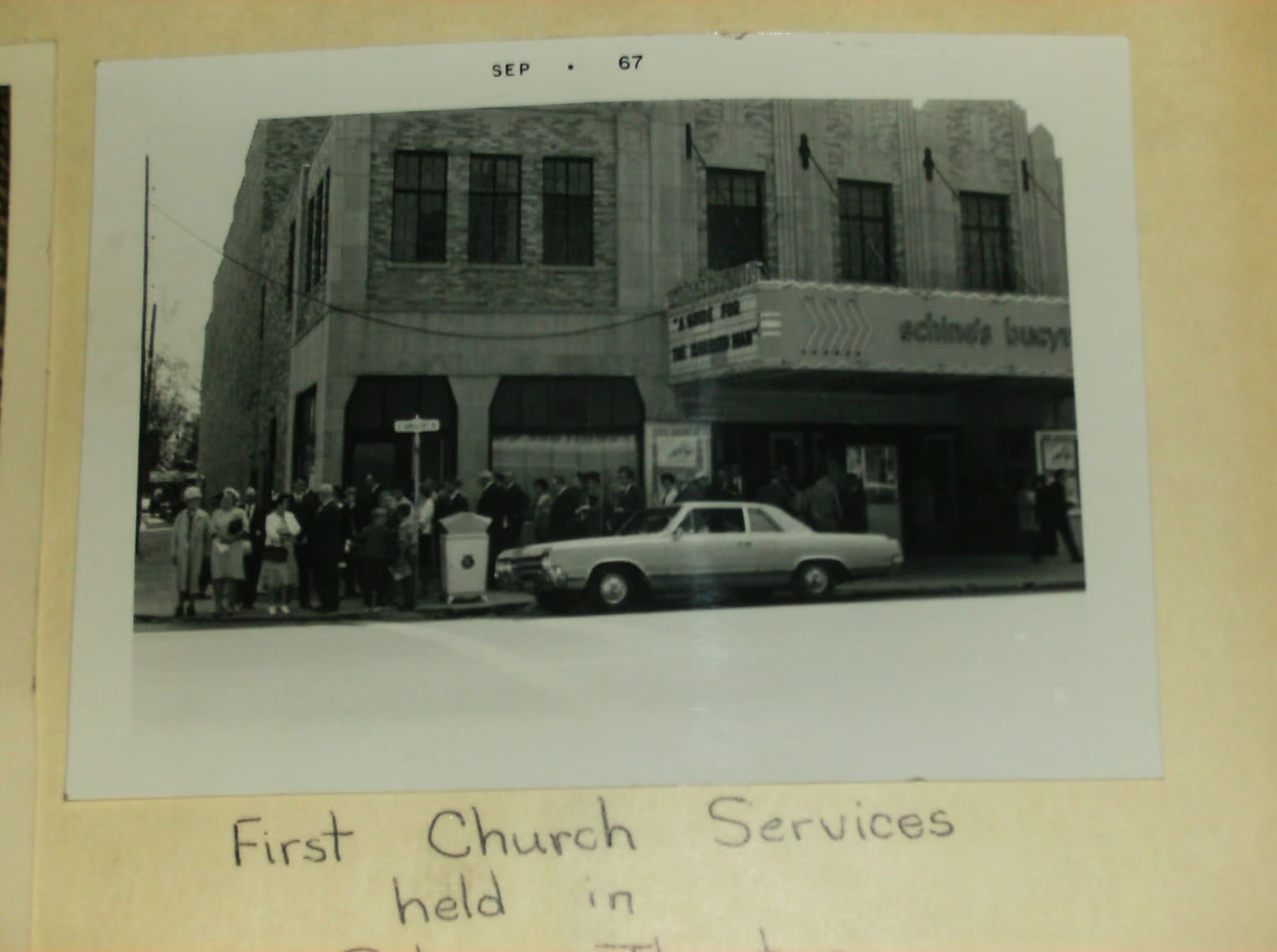
For 18 months, in 1967 and 1968, the congregation attended services at the local theater while the remodeling was done. The ground breaking was conducted July 23,1967, and on December 15, 1968, the Good Hope congregation dedicated the new facilities to the preaching of the Gospel and the ministry of mercy rendered in His name.
The educational unit fronting on S. Poplar St., where two houses were removed, is a three-story structure with classrooms on every floor divided by soundproof sliding doors so that each floor may be used as a large meeting room or small individual classrooms.
The second floor contains offices for the pastors, the bookkeeper, Kathy Daiber; the historical room, and the library.
The educational unit also provides space for the sacristy and the church secretary, Elma Diller.
There is also an equipment workroom for church duties.
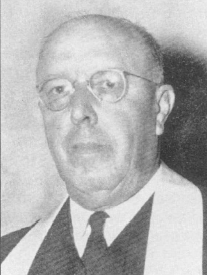
REV. E. KRESSIN 1963-1975
Sanctuary Remodeled
The sanctuary was completely remodeled with a new chancel, new pews, new carpeting, widened aisles and an organ to which 12 new ranks of pipes were added, along with a new console.
The former choir loft was removed and the organ and choir were moved to the balcony area. New entrances were provided around the entire building with the entrance at the northwest corner of the building on W. Charles St. being the main entrance through which there is access to every part of the building.
The new entrance replaced the former entrance on the northeast corner, with its many steps and the entrance to the chapel area. The former entrance at the northwest corner of the church was also closed and the steps removed, replaced by a new entrance between the church and the educational unit, across the street from the S. Poplar St. parking lot.
.gif)
PASTOR MILHEIM 1969-1973
Cry Room
The vestibule of the former northwest entrance was converted into a cry room where mothers can watch their children and also see and hear the services through a speaker and a window in the south wall.
The church building committee which supervised the program was chairmaned by Dr. Carl J. Ide and included Miss Martha Kostenbader, Miss Augusta Jenner, Lester Nye, Lloyd Murphy, Ralph Hinamon, Gerald Zeigler; John Gebhardt; and Don Young.
Working with them in an advisory capacity were Rev. Bauerle; Robert Beal, chairman of the church council; Dr. L.L. Fisher, Sunday School superintendent; and Richard Ekleberry, campaign funds chairman.
Rev. Bauerle continued his service at Good Hope until April 13, the first Sunday after Easter, in 1969. He accepted the call of the Zion Lutheran Church in Sandusky to be their head pastor.
The Rev. Paul Milheim assumed the pastoral duties of Good Hope Lutheran Church in July of that same year. He worked with Rev. Menchhofer and Rev. Kressin.
Recent History
In the early 1970, several events proved to be significant to the people of Good Hope and the community of Bucyrus. After much discussion, it was decided to provide the space for a Day Care Center which opened in 1970 in the lower floor of the educational unit. A fund for summer campers at Lutheran Memorial Camp began in the Youth Committee. Both projects have continued into the 1990.
In 1973, Pastor John Kerr became Senior Pastor of Good Hope Lutheran Church. Pastor John leadership and administrative talent was quickly evident as several important changes took place. A full-time secretary was hired; a nursery was established; outdoor worship services were held again at Aumiller Park, then later moved to Camp Michael; First Communion was placed at the 5th grade level after several weeks of instruction with 1st Communion being held on March 7, 1973, Ash Wednesday; Confirmation instruction expanded to a three-year program; the constitution was revised; 15 youth went to the National Youth Convention held in New Orleans; and coffee was offered in the lounge for the first time in a weekly post-worship coffee hour.
Pastor John Kerr was also instrumental in reshaping and re-tuning the council and committee functions at Good Hope. The Church Council now consisted of nine committees (Executive, Finance, Stewardship, Youth, Public Relations, Outreach, Property Care, Parish Education, Worship and Music), each with detailed duties, sub-committees and policies.
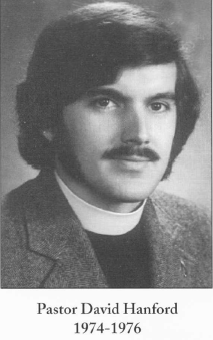
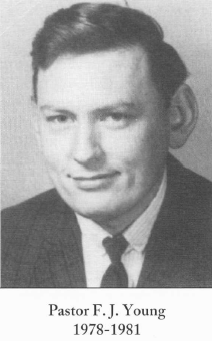
During this period, congregational worship was also affected. More lay participation was evident in the advent of lay lectors and help with children sermons. The Sunshine Choir was formed by Doris Sheaffer in 1976. In 1978, the new green book or Lutheran Book of Worship (LBW) replaced the old Service Book and Hymnal (SBH) in December and Papa Joyce from Tanzania was called as an assistant pastor for three months. Pastor Arnold Mathisen accepted a call to be come visitation pastor in March of 1978 and served Good Hope faithfully until his retirement in 1986. The congregation decided to try having the Sacrament of Holy Communion two times a month (the first and third Sundays). Good Hope has continued this practice into the 90s. 1980 saw the people of Good Hope celebrate the 200th Anniversary of the Sunday School in the Christian Church. There was noted in the church newsletter a concern that attendance in Sunday School averaged 628 in 1961 and was now closer to 170 per Sunday. Worship attendance has also dropped from a record high of 580 per Sunday in 1969 to an average of 434 in 1980. This continues to be a concern as these trends have, quite frankly, never reversed. 1980 did see a positive outreach as Good Hope sponsored a Laotian refugee family, the Chailee's to resettle in Bucyrus. Support for this family continued for over 10 years. Serving during this period as assistant pastors were David Hanford and Franklin Young.
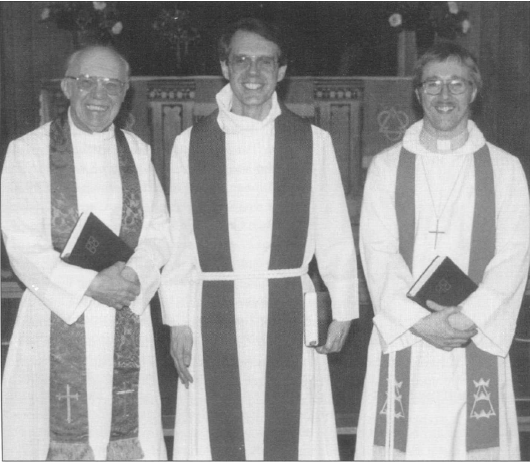
Arnold Mathisen (1978-1986), John Kerr (1972-1985), Michael Wiechers (1984-2009)
Pastor Michael Wiechers accepted a call to be the Associate Pastor at Good Hope and was installed September 9, 1984. Pastor John Kerr accepted a call to become Pastor at Coon Rapids, Minnesota, in February of 1985. Pastor Mike was then called and installed as Senior Pastor in June 9, 1985. Pastor Ralph House served as a second visitation pastor until his death in September of 1985. The congregation welcomed the arrival of Pastor William Michaels on August 10, 1986. A congregational vote in 1986 discontinued two staff positions the visitation pastor and tentmaker.
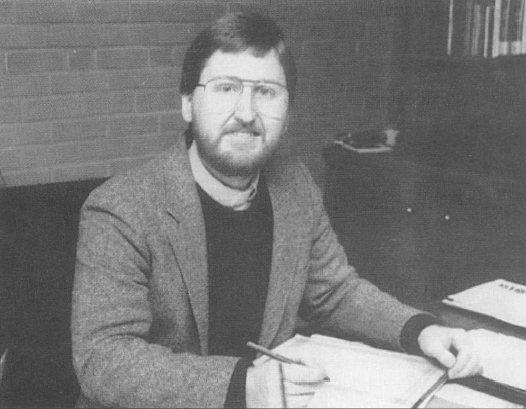
Pastor Bill Michaels
Pastor Mike and Pastor Bill continue to serve Good Hope Lutheran Church. Both have celebrated the 10th anniversaries of their Ordinations to the Ministry Pastor Mike in 1987 and Pastor Bill in 1990.
The past decade has seen many changes at Good Hope and the beginning of several new projects. To name but a few by year
1985 Elma Diller and Cheryl Brinkman went to Minneapolis for training to become Christian Clowns. The Good Hope clown troupe, CLOWNS FOR CHRIST, came into full bloom in 1986 with 13 clowns spreading the gospel.
Our 1942 Kimball organ was completely remodeled at a cost of just over $80,000. The additional ten ranks of pipes have increased the beauty of one of the finest organs in this area of the country.
1986 The Friendly Callers were organized to personally call on local inactive members or write out-of-town members reminding them that we are concerned with their spiritual welfare, their church attendance and participation. Over 700 members were contacted in a 5-year period.
1987 saw the people of Good Hope renovate their kitchen and redecorate the Sunday School auditorium at a cost of $19,800.
Spiritual Adventure groups that had begun in the late 1970 were re-vitalized throughout the congregation for the purpose of discussion, Bible study, prayer, personal encouragement and growth.
The mens group, MEN OF HOPE, was again re-vitalized with fellowship and Bible Study on Tuesday evenings and twice a month on Saturdays. This group is also active at the synod and national level.
1988 We increased from a two worship services on Sunday morning to include a more informal prayer and praise service twice a month on Sunday evenings.
A vote was taken to join Good Hope to a new Lutheran church, the Evangelical Lutheran Church in America (ELCA). The vote was in favor of the merger and on January 1, 1989, the ELCA became a reality with Good Hope as a member. This meant a new Conference, new Cluster and a new Synod: Northwestern Ohio Synod. In aligning with a new ELCA, Good Hope revised its constitution which was ratified at the annual meeting, January, 1990. 1989 In the fall, a Junior Bell Choir was organized as a result of a gift from Orville and Gladys Eppley. The bell choir has added beauty and versatility to our worship. The office and staff became computer friendly as two new computers and word processors were purchased. The system will eventually make the church record keeping more streamlined and convenient. In October we dedicated two new rooms to our building. The Ralph A. Hinaman Library expanded our bookshelf space and the Chester L. Lahr Historical Room has allowed us to keep our historical and memorabilia in one room. In January,1990 a satellite office of Lutheran Social Services opened its doors to the Bucyrus community thanks to Good Hope. Counseling services were offered at first one day a week; and now have been expanded to a full-time counselor working five days a week.
Good Hope enthusiastically jumped into Mission90 as we saw video tapes called What Does It Mean To Be A Christian? These were shown two nights a week as well as to our new member class. Late fall saw us kick off the New Venture in Bible reading as over 150 of our members and friends signed up to read the Bible every day. In the we will continue to SEE-GROW-SERVE.
The fall of 1990 saw Good Hope send, support, and encourage three of our members to seminary training. Kathleen Shuck attended Wartburg Seminary in Dubuque, Iowa. Cheryl Brinkman and Anya Schell began seminary training at Trinity Seminary in Columbus, Ohio.
Council and the Public Relations Committee recognized even more fully the need for media presentation in the modern age. We sponsored the radio show, LUTHERAN VESPERS, over a Galion station. We updated our sound system at a cost of $13,000. We continued to broadcast our 10:30 a.m. worship service live on a local Bucyrus radio station. We also taped our service on a new video camera and ran the service on a local Bucyrus Access channel on television. We submitted some advertising in the local newspaper, promoting our weekly events. In the spring, a Parish Visitors Program was started where shut-in members of the congregation were called on, along with pastoral visits. This will enhance the visitation outreach at Good Hope.
There are three active youth groups at Good Hope, ranging from fourth grade to post senior high. This year saw 15 of our youth and two advisors attend the National Youth Gathering in Dallas, Texas, July 3-7. The Senior League continues to rent a house at Lakeside each year to offer a week of fun and growth. Good Hope Lutheran Church, in the past years, has always sought to look both inward and outward. The people of the congregation have grown over the years in number as well as spiritually. We have increased Bible study and worship in hopes of learning more about the Word of God and what is means for our lives. We have sought to make worship more personal and meaningful, as it relates to our daily lives. Throughout the years, Good Hope has generously supported benevolences locally, nationally, and worldwide. In 1990, Good Hope gave over $74,000 to benevolence, 40% of the budget. This is commendable and Christ-like. We have established, over the years, Partnerships in Mission with many congregations: places like All Saints, Nicholasville, Kentucky; Hope in Cincinnati; Living Word in Medina; and Ascension Lutheran in Louisville, Kentucky.
On October 24, 1991, Good Hope experienced what could have been a disastrous fire in the power room. Most of the breaker boxes and all of the wiring was destroyed and yet the fire was contained, miraculously, within the walls of that small room. We were without earthly power for almost 10 days and yet Gods power was evident. Our candlelight, Reformation Sunday worship service was truly a spiritual filled experience one of many we have at Good Hope.
As we continue in the future to be blessed by God may we continue to be a blessing to others. The church has stood as a monument to devotion, faith, loyalty, and the generosity of a group of people who by prayers, gifts, and labors have made possible the preaching of the Gospel of Jesus Christ these many years.
Organizations of Good Hope
The Junior Mission Band - the beginning of the future
The Junior Mission was organized in the fall of 1922. The first leaders were Mrs. Homer Lehman, Mrs. Louis Ronfeldt, Mrs. W.C. Assenheimer and Mrs. Sam Virtue. The purpose of the organization was to interest the children in mission work because it was thought they would, at a later time, be a part of the Missionary Society. The band was under the jurisdiction of the Women Missionary Federation of the American Lutheran Church
In 1942 there were forty members in this band. The meetings were always held in the Parish House and held the first Sunday of each month during the regular church service.
An offering was taken at each regular meeting, and at each harvest festival thankoffering boxes were collected. This money, along with the money from other bands, paid for the land on which the Kodiakanel Hostel in India is built and for the erection of the Hostel itself along with the furnishing of it.
Other projects were paying toward the salary of the house father at Jumisba, the name of the Hostel, and for the education of a Mexican girl at the Texas Lutheran College, Texas.
Charles Pirnstill was the 1942 president; June Ann Kurtz, the secretary; and Gretchen Click the reporter. The band leaders were Eleanor Staiger and Edna Myers.
The Lutheran Brotherhood - work and play among men
It was on the tenth of March, 1910 that a German Biblical drama was very successfully presented in the old Bucyrus Opera House by an energetic group of young men from Good Hope Lutheran Church. The inspiration which was created in these young men was the foundation of a very necessary organization.
In the first part of May, 1910, eighteen of these young Christian men under the splendid guidance of their pastor, the Rev. J.W. Kuntz, organized the German Lutheran Men Society, which was known as the Good Hope Lutheran Brotherhood.
The early aims of the society were to develop better social relationship and fellowship, to be of service to the Church at home and aboard, to give aid to the various civic needs of the community, to assist in the numerical, physical, and most important of all, the spiritual growth of Good Hope Lutheran congregation and the church at large.
Needless to state, the Brotherhood has always endeavored to fulfill these original aims.
Raising large sums of money had not been one of the main ambitions of the Brotherhood, but records show that several thousand dollars had been contributed for carrying on the work of the church.
1990
The first officers were: president, J.A. Leifer; vice-president, Otto Feiring; secretary, Frank Donnenwirth; treasuer, Frank Flohr; reporter, R.O Liebich.
Recently, the mens organization at Good Hope Lutheran Church was revitalized, thanks mostly to the efforts of Robert Schifer. The MEN OF HOPE, as they are now called, meet every 2nd and 4th Saturday morning of the month. They gather for a light breakfast, fellowship, and prayer. There is also a timely Bible study on such subjects as the Book of Mark; what is a Christian man? And the Book of Ephesians. These men have also organized into an every Tuesday evening Bible study/prayer group. They are currently traveling through the Bible in a year.
Womens Group
Lydia Womans Society of Good Hope Lutheran Church was organized in 1890 with 31 women as members during the pastorate of the Rev. C.F. Gebhardt. The purpose was to aid the poor, sick and afflicted and to spread the Kingdom of God. After the 25th year anniversary, the organization was called the Ladies Aid. In 1940, they celebrated their 50th anniversary and then disbanded in 1941 having grown from 31 members to 184 members, but then decreased in attendance to 33. This decline in membership was due to loss by death, but also that until 1938 all meetings were conducted entirely in German.
In 1909, the Young Womens Missionary Society was formed for the English speaking members. In 1917, it became affiliated with the Evangelical Lutheran Church.
At the meeting of society in February, 1938, the name was changed to Womens Missionary Society. Ninety-five members became affiliated with the Womens Missionary Federation of the American Lutheran Church (1931-1959). During 1940 to 1960, the society was called the Womens Missionary Federation. Â During this time, the society was divided into groups. Meetings were held in the homes doing work in order to raise funds to help pay for the new organ and the new carpeting when the church was redecorated for the 100th anniversary in 1942.
During these many years, missionary work had been done: contributions were made to India, New Guinea, Mexico, and Kurdistan. The ladies groups also supported the Orphans and Old Folks Home as well as the Toledo and Columbus Inner Mission work. Donations were made to such places as the womens dorms in Columbus as well as to the salary of our local religious training teacher in the public schools.
In between these years in 1939, twenty-seven young women organized a new society called the Lutheran Daughters. This membership totaled around 50 and was made up of the classes of Faith, Ruth and Angela. The purpose of this group was to utilize the energies and interests of young women in the service of the church and to study the doctrine of the American Lutheran Church so they could be of service to the church at large.
In 1960, all womens names were placed in circles to make up the Women of the American Lutheran Church. This organization lasted until 1987 when, with the merger of the Lutheran churches, we were known as the Women of the Evangelical Lutheran Church in America. Mrs. Myrtle Noblit was the first president of the A.L.C women.
Some of the projects of the ALCW were:
1968 Ingathering For Life (Lutheran Ingathering for Education)
1969 Quilts, blankets, activity kits and layettes were sent overseas
1970 The winterizing of Lutheran Memorial Camp
1972 Mrs. Kulow goes to Japan for a caring and sharing project
1975 ALCW were involved with World Hunger Mission Appeal
1978 Established a furlough house in Columbus for missionaries
1983 Woman to Woman project
1984 Katakshamma came from India on the Woman to Woman project
1985 The purchasing of a bus for Capital University
On April 2, 1987, the North Central Conference Festival was held to end this era of the ALCW. The past presidents of the ALCW were:
Myrtle Noblit
Kathryn Fischer
Mary Jane Keyes
Mary Ann Ruth
Norma Larsen
Cleo Ufferman
Cleo Davis
Ethel Wilson
Florence Shuck
Millie Palenshus
Marian Marggraf
Eileen Heydinger
Augusta Jenner
A task force committee was set up, composed of Linda Bean, Julia Kalb, Augusta Jenner, Millie Palenshus, and Kathy Shuck, to form a new organization called the Women of the Evangelical Lutheran Church in America.
Women of the ELCA
In 1987, following the formation of the ELCA, a task force of five women was appointed to study the needs of the congregation, the needs of the women, and the new recommendations for the Lutheran womens organization, in order to reorganize the American Lutheran Church Women (ALCW) into the Women of the Evangelical Lutheran Church in America. In April 1988, the new organization began and a constitution was adopted.
The Good Hope Women of the ELCA is made up of five circles: Good Morning, Naomi, Hannah, Grace and Hope, which meet monthly for Bible study, group information, discussion and fellowship. One circle meets in the morning, one in the afternoon, and three in the evening to accommodate the schedules of the women. All women of the congregation who take part in any way which indicates a commitment to the purpose of the Women of the ELCA are called participating members. Only those, however, who choose to attend circle meetings are known as belonging to a specific circle.
An executive board meets monthly to carry on the business of the organization. It is composed of the president, vice-president, secretary, treasurer, coordinator of service for worship, coordinator of congregational service, coordinator of service for worship, coordinator of community service, and coordinator of worldwide service, along with a representative from each circle.
The Women of the ELCA have many projects. Quilts are made, layettes assembled and school, health, and sewing kits are made up for Lutheran World Relief. Thankoffering boxes are used and collected in the fall for mission work of worldwide Women of the ELCA. Monetary gifts are presented to church homes and social services. Forty percent of offerings given at circle meetings is sent on to the synod for mission projects. Campership donations are made for all Good Hope members and books are given to confirmands and high school graduates.
The Women of the ELCA take care of lunches after funerals, receptions, delivering Meals on Wheels, providing cookies for many occasions, cleaning the kitchen, washing communion glasses, delivering altar flowers to shut-ins and obtaining greeters. The prayer chain is organized and operates through Women of the ELCA; and cards are sent to the ill, shut-ins, and for special occasions. The collections of clothing for Lutheran Social Services, the planning of a Mother-Daughter Banquet, serving the Father-Son Banquet, and the Golden Age dinner are other projects taken care of by the WELCA.
Since the formation of Women of the ELCA, Julia Kalb has served as president; June Berry and Laura Pfleiderer, vice-presidents; Gale Frey, secretary; and Marilyn Peterman and Alice Magers as treasurers. Augusta Jenner, Cleo Davis, Rachel Schaaf, Eileen Heydinger, Carol Long, Millie Palenshus, Janet Lady, Martha Kostenbader and Mary Ann Ruth have served as coordinators.
May God continue to guide and bless the mission of Good Hopes Women of the ELCA.
The Luther League - work and fun for all
In 1877 the young people of Good Hope Lutheran Church of Bucyrus felt the urge to band into an organization of Christian fellowship. Under the direction of Rev. J.F. Graessle, the Young Peoples Society was formed. The membership included boys and girls who had just been confirmed and all those who were young in spirit. The group elected Frank Liebich, president, Carrie Donnenwirth, vice-president, and Frank Renkert, secretary. The meetings which were entirely in the German language, were held twice a month. They were opened and closed with devotions. After the opening songs and prayers, routine business was transacted. A discussion of a topic based upon the Scriptures was held, after which a social time followed.
Since no records are available, it is not known when this organization ceased to exist, but in 1889, during the pastorate of Rev. F.W. Deiss, a new organization was formed. German was the language used at this time, but later on the meetings were conducted in both the German and English languages. This went on for about four years, after which time English was used exclusively. During this time, there were approximately one hundred fifty members. This was the most powerful organization in the church because the members were of both sexes and there was no Brotherhood or Missionary Society yet. With the coming of these other organizations, the membership of the Young Peoples Society naturally decreased. The name of the society was later changed to Luther League. Business and social meetings were held once a month.
The youth at Good Hope continue to study and search, gather and have fun, serve and encourage. The Alpha League is for grades 4 through 6. There have been as many as 40 gather for an event (42 went bowling recently). Their activities are a combination of fun and spiritual growth prayer partners were chosen for one year. The Junior League attracts those in grades 7 and 8. Their favorite event, in recent years, has been the LYE (Lutheran Youth Encounter) weekend retreat in Toledo. The Senior League is for High School (grades 9-12) and post high school age. After attending the national Youth Gathering in Dallas in 1991, enthusiasm ran and still runs high. We learned about our faith, how we grow, and how we can share that faith with others in our world. Many have said that our youth are the future of the church. That, to some extent, is true. But our youth are also telling us that they are the church of NOW!
The Choir - with music in their souls
As far as we can determine, this organization is one of the oldest in our church. Yet, strange as it may seem, there never have been any records kept so that we can give due credit where due credit belongs. Everyone will agree that we always have taken this organization for granted, that we have enjoyed the services rendered during special seasons as well as every Sunday, and that we seldom have expressed our full appreciation. May we all join in giving our thank you sincerely to all those, old and young, who have contributed toward this phase of our church work in any matter and at any time.
Among the directors whom this committee has been able to trace are: Phillip Schaefer, Adam Ulmer, Rev. F.W. Deiss, Gus Goldsmith, Mrs. William Unger, Mrs. Karl Pirnstill, Mrs. Luther A. Sherer, Dortha Given, Verletta Pirnstill, Wayne Shaw, Shirley Stayrock, Ken Boos, Roxanne Palenshus, Barkley Rohrbaugh, Robert Slater, Doris Sheaffer, Edna Myers,
Sharon Zahn and Deb Barkhurst. The organists, as far as can be ascertained, were: Sophia Graessle, Frank Walther, Mrs. F.W. Abicht, Emma Kehrer, Richard Liebich, Mrs. Nevin Bretz, Barbara Kantzer, Mrs. Harold Bosse, Sherry Fisher, Edna Myers, Norma Oppenlander, Julia Heid, Pamela Etsinger, Robert Hieber, Kathryn Unger, Stella Gebhardt, Mrs. Katterhenrich, Wayne Shaw, Anya Schell, Gary Auck, and Patty Neff.
The choir of 1992 remains an integral part of our worship life here at Good Hope. Under the direction of Robert Slater, and with the help of organists Patty Neff and Gary Auck, the choir continues to practice hard and provide the congregation with anthems and solos that uplift, worship and glorify God. As a special part of our 150th on Reformation Sunday, October 25, 1992; a hymn written by John Ylvisaker, and an anthem by Craig Courtney was sung. The choir also recorded a tape.
The Junior Bell choir was organized and is directed by Deb Barkhurst. They continue to provide worship with an exciting part of our music program. The bell choir is for grades 4-8, and in 1990, for the first time, a part-time adult bell choir was organized for the Christmas season.
The Sunshine Choir, organized by Doris Sheaffer, remains to attract youth from grades 1 through 3. Sharon Zahn teaches these youngsters many new and vivacious songs that the children love to sing. Hopefully, they are being prepared for singing in our other choirs.
The Sunday School - training our youth and parents
Good Hope Lutheran congregation has maintained an active Sunday School since its organization in 1842. It was not until 1858 that it was deemed advisable to keep records, and in a minute book of that year, we find the regulations and objects of the school set forth, in the German language, as follows our Sunday School has made its aim the education of its Youth in the Christian religion, it naturally follows that everything injurious, antagonistic and contradictory thereto, in scripts, instructions and precepts, shall be kept distant therefrom; therefore the teaching personnel may consist only of such persons who have confessed the faith of our Church and are thereby willing to apply those talents to the best of their ability and to the honor of God and the welfare of the undying souls of the youth, in this assigned sphere of activity.
At that time, the following officers were elected: Carl Schuler, superintendent, John G. Birk, secretary-treasurer. The Sunday School then consisted of seventeen teachers and about eighty pupils.
Later on, the Sunday School was under the management of the pastor of the congregation with a vice-superintendent assisting when necessary. Gottlieb Scheffler held this latter office from 1864 to 1904; George F. Fisher, 1904-1916; Millard E. Schieber, 1916-1928; Ervin S. Lutz, 1928-1939; Fillmore H. Grauer, 1939. Sunday School superintendents over the years have been: Crosby Jamison, E.C. Oppenlander, William Graetz, Dick Wilson, Dr. L.L. Fisher, Carolyn Schurr, June Prange, Elwood Gebhardt, Charles Frobose, Arleen Myers, Elma Diller, Alice Beers, Sarah Jane Gebhardt, Mary Scott, Sandy Cotsmire, JoAnne Fannin.
On January 29, 1913, the Cradle Roll Department was inaugurated and Miss Lydia B. Streib and Miss Bertha Graessle were appointed to take charge of the same. A Home Department was organized on July 13, 1923, with Mrs. P.A. Dapper, superintendent; H.J. Hildebrand, assistant superintendent, and Mrs. Thomas Ross, secretary.
The school was conducted entirely in the German language until about the year 1900 when it became necessary to instruct some classes in English; and the number was gradually increased until January, 1917. Since that time, English only has been used.
A constitution was adopted in 1937. The Good Hope Sunday School of 1992 is trying to rebuild. After a low Sunday attendance per week for the past couple of years, the Sunday School, under the direction of new superintendent, Luella Fuller, has sought to encourage attendance and strengthen our program. There are currently three adult classes and a new member class offered twice a year. We offer a special education class as well as ten other classes in the nursery; kindergarten; primary; junior department; and junior high departments. Recently, the Senior High youth have re-organized and a new class for the pre-nursery age children has been started. We pray the stories and the lessons from the Bible will live on and on into the next generations of Lutherans here at Good Hope.
Good Hope Pastors
J.D. Schuh 1829-1831
J.D. Strauch 1832-1842
J. Kraus 1842-1854
A. Michaelis 1855-1867
J.F. Graessle 1867-1880
C. Eirich 1881-1887
F.W. Deiss 1887-1890
C.F. Gebhardt 1890-1897
J.W. Kuntz 1897-1910
O.A Bertram 1911-1934
H.H. Glick 1934-1948
E.J. Katterhenrich 1949-1960
Richard Bauerle 1961-1969 (Senior)
Edwin Kressin 1963-1975 (Visitation)
Ray Menchhofer 1967-1971 (Assistant)
Paul Milheim 1969-1973 (Senior)
John Kerr 1972-1973 (Assistant)
John Kerr 1973-1985 (Senior)
David Hanford 1974-1976 (Assistant)
Franklin J. Young 1978-1981 (Assistant)
Arnold Mathisen 1978-1986 (Visitation and Assistant)
Michael Wiechers 1984-1985 (Associate)
Ralph House 1985 (Visitation)
Michael Wiechers 1985-2009 (Senior)
William Michaels 1986-1994
Harold Hasenauer 1994-2014 (Visitation)
Melanie Haack 1995-2002
Tentmaker-Youth Ministers
Karla Seyb 1982-1984
Heather Rhodes 1984-1986
Sons and Daughters of Good Hope
Paul Baumgartner, Ordained 1936
Grant Shealy, Ordained 1940
Richard Schieber, Ordained 1964- presently serving Zion Lutheran, Sandusky, Ohio
Roger Wenninger, Ordained 1967-presently serving Abiding Savior, Ft. Lauderdale, Florida
Karla Seyb-Stockton, Ordained 1988-presently serving Ashland Naval Hospital, Oakland, California
Seminary Students
Cheryl Brinkman entered Trinity Lutheran Seminary, Columbus, Ohio-1990
Anya Schell entered Trinity Lutheran Seminar, Columbus, Ohio-1990
Kathleen Shuck entered Wartburg Seminary, Dubuque, Iowa-1990
150th Anniversary
1990 Statistics:
Average Sunday Attendance 389
Average Sunday School Attendance 125
Household/Families 956
Baptisms 18
Confirmations 14
Transfers 31
Deaths 18
TOTAL Baptized Membership 1,705
TOTAL Confirmed Membership 1,280
Ordered list
Current Expenses $198,770
Benevolence Giving 74,798
Committee:
Pastor William Michaels, Chairperson
Pastor Michael Wiechers
Ann and Red Cosgrove
Margaret Fischer
Jan Heckenhauer
Angi Lederer
Millie Palenshus
Carolyn Sand
Mary Scott
Robert Slater
Phyllis Wiechers
Church Address:
Good Hope Lutheran Church
129 W. Charles St.
Bucyrus, Ohio 44820
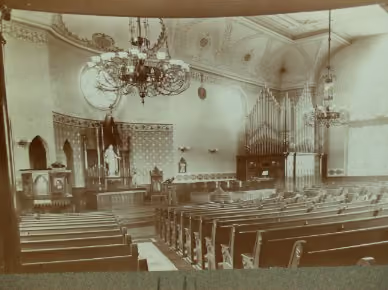
Picture of Good Hope with Gas lights
1992 COMMITTEE DIRECTORY
Good Hope Lutheran Church
Bucyrus, Ohio
CONGREGATION COUNCIL
Executive Committee:
Chairperson Glen Beers
Vice Chairperson Raymond Brown
Secretary Connie Long
Treasurer Donald Long
Financial Secretary Randy Lady
Committees:
Education Committee Cindy Snyder
Vice Chairperson Joann Johns
Worship-Music Committee Ethel Wilson
Vice Chairperson Scott Harvey
Stewardship Committee Raymond Brown
Vice Chairperson Norma Larsen
Property Care Committee Tim Meister
Vice Chairperson Gale Ruth
Public Relations Committee Jody Hannewald
Vice Chairperson Millie Palenshus
Youth Committee Larry Shutler
Vice Chairperson Boyd Long
Outreach Committee Connie Long
Vice Chairperson Marlene Crall
Finance Committee Randy Lady
Treasurer Don Long
This History was compiled and edited by Pastor Michael Wiechers, November 1991. Special thanks for the faithful help of Martha Kostenbader. Thanks also go to Pastor Bill Michaels, Elma Diller, Julia Kalb, and the 150th Anniversary Committee, especially Carolyn Sand.
SESQUICENTENNIAL ANNIVERSARY YEAR
January 19 Heritage Kick-Off Sunday, Bishop James Reve, Preacher, 8 and 10:30
Annual Meeting, 1:00
April 19 Easter Celebration
May 3 Choir Concert, 7:30
June 7 1992 Confirmation Class, Pentecost
Confirmation Class Reunions 1917, 1942, 1972
August 23 Outdoor Heritage Service, Camp Michael, 10:30
September 13 Sunday School Rally Sunday
September 20 Loyalty, Consecration Sunday
September 27 Harvest Home Festival
Senior Citizens Sunday, 10:30
October 4 Pastor John Kerr
Homecoming Dinner, Entertainment
Chapel Communion, Pastor Mathisen, 4:00
October 11 Pastor Menchhofer, Kathleen Shuck Reception
October 18 Pastor Richard Schieber Reception
October 25 Reformation Service
Birthday Celebration
Choir Festival, 7:30
November 15 WELCA Thankoffering Service
December 20 Sunday School Christmas Program
December 24 Christmas Eve Candlelight Services, 7:30 and 11:00 p.m.
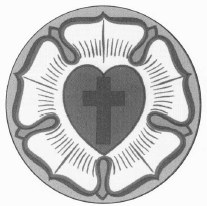
LUTHER'S COAT OF ARMS
A cross on a heart, resting on the center of the Messianic Rose and surrounded by a circle to symbolize eternity, was adopted by Luther as his own Coat of Arms and as an expression of trust in God. The Christians heart is resting on roses while beneath the cross it reposes. The colors are usually gold for the circle; the outlines of the petals, red; the background for the rose, a heavenly blue; the heart, red and the cross, black. Reformation day is October 31.